Yesterday afternoon, I went to see "Creation", the new film out centred on Charles Darwin's relationships with his wife and his daughter, Annie. I guess I am in a unique position in writing this as I am sitting about two hundred yards from Montreal House in Malvern, where Annie died in 1851 and I live on land that was once part of the estate of the Lodge, the house in which Darwin and his family (including Annie) stayed for a few months in 1849.
But geographical proximity is not the real issue here--I have been far too close psychologically and intellectually to Darwin and his life, and Annie's role in it, for far too long to ever approach the movie as most viewers will. With that in mind, I was preparing to be disappointed, but in fact for the most part I enjoyed the movie, as did my children, because I remembered to tell myself that it was a work of imagination not historical biography.
There are lots of minor historical inaccuracies in the film, but as Eugenie Scott has pointed out, "Creation" will bring many aspects of Darwin's life, particularly his family life, to a wider audience, including the tragic loss of his daughter here in Malvern and the misery of his chronic illness. The acting is great, particularly Martha West as Annie and real husband and wife team Paul Bettany and Jennifer Connelly as Charles and Emma. And the lavish cinematography is a treat.
There were two things in the film I did not like. One was the way in which it flitted from one part of Darwin's life to another, back and forth across the decades. I would have preferred a simpler narrative. But more problematic was the way in which the film inter-linked Darwin's various struggles, intellectual and emotional, when as far as I am aware they were never linked. For example, there is no evidence that the death of Annie Darwin had any effect whatsoever on Darwin's work on the Origin of Species. And it is unclear to me whether differences in attitude to religion between Charles and Emma Darwin, which were clearly raised as an issue around the time of their marriage, persisted as a problem in their relationship as late as the film suggests, i.e. into the late 1850s. I may be wrong and will have to look into this, but the level of emotional intensity on Darwin's part in the film on this issue strikes me as off-kilter.
But all-in-all, a good film which I advise you to go and see! At the very least, it will banish the tired icon of Darwin as merely an old man with a bushy beard!
Showing posts with label Emma Darwin. Show all posts
Showing posts with label Emma Darwin. Show all posts
Sunday, September 27, 2009


Monday, June 22, 2009
Emma Darwin's poignant diary entry
I am still slowly but surely working away on a paper debunking the myth that Annie Darwin's death had anything to do with Charles Darwin's loss of faith in Christianity. And in preparing the paper, I have been looking at the diaries of Charles Darwin and of Emma Darwin, his wife.

There has been quite a bit of publicity about the recent publication of Emma's diaries, but I didn't realise until recently that Charles Darwin also kept a journal of his life (see the Introduction by John van Wyhe). Darwin started keeping the journal in 1838, but backdated the entries to his birth, and made the last entry just four months before his death.
In researching the background to Annie's final illness and death, I took a look at both diaries. Annie Darwin fell ill in the summer of 1850, as is evidenced by this entry from Emma's diary for 27th June:
"Annie first failed about this time"She was taken to Malvern by Charles on March 24th 1851, in the hope that she would benefit from Dr Gully's water cure. Charles records this and the subsequent tragic events on a single poignant page in his diary:
"March 24th to Malvern with Annie & Etty. returned home 31st.— April 16th. started for Malvern. April 23d our dear child expired. 24th. I returned to Emma. Our darling was born March 2d. 1841.—"Emma in her diary maintains a progress report on Annie, gleaned from the letters sent by Dr Gully and by Charles. Unlike most of her diary entries, which tend to be rather terse, her entries on Annie are more informative than usual. On 7th April she writes "Annie's sickup"; on 13th April: "Annie very weak"; on April 14th "Better, Dr G. said she had turned the corner"; on April 15th: "Dr G alarmed, wrote for Ch./ began urine".
I will leave it to you the reader to follow Emma's records of Annie's illness through these links to individual pages for each week:

But for me Emma's entry on Annie's death is the most poignant of all these diary entries, whether from Charles or Emma. After writing "much better" on April 21st and "diarrhea came on" on April 22nd, for April 23rd, she writes simply:
"12 o'clock"
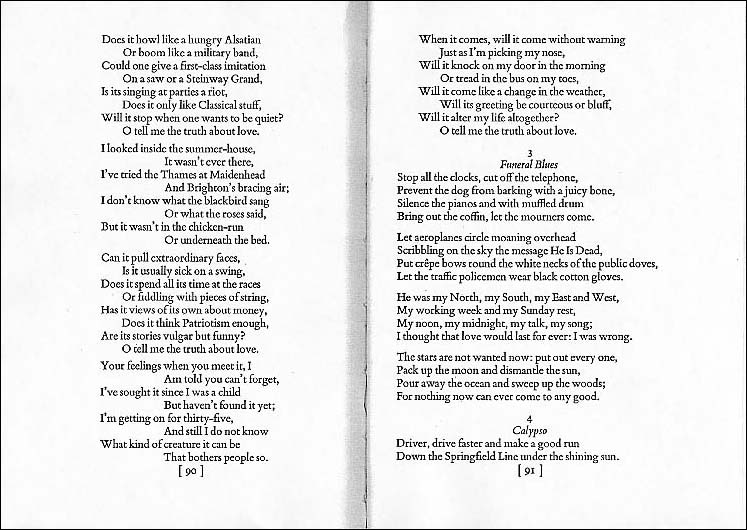
the time of Annie's death. This reminds me of Auden's poem, Funeral Blues: "Stop all the clocks..." and, for me, nothing in any of the accounts of Annie's illness and death could be more arresting.
Friday, May 8, 2009
The Wire, the Darwins, re-ups and the N word
 OK, confession time! After the Darwin bicentenary, even as a hardened Darwin fan, I had had my fill of darwinizing*, at least for a while. And after writing, editing and launching The Rough Guide to Evolution, I was a little maxed out on evolution.
 So, what did I do to purge my mind of Darwin and evolution (as a necessary prerequisite for renewing my interest)? Since February, I have watched four series of the excellent cult TV series, The Wire. In fact, this evening I started the first episode of the final fifth series.
But there is a more shocking link between The Wire and Charles and Emma Darwin...
But why am I telling you this? Surely, there is no connection between Darwin, evolution and The Wire? Well, according to its originator, David Simon, The Wire draws inspiration from the epic poetry and tragic drama of Ancient Greece (with some not-so-hidden clues: "The Greek" is a main character and in Series Four, Prez reads out test questions in class on Greek myths).
And as Jonathan Gotschall, and other proponents of literary Darwinism have shown, you need evolution to explain the world of Homer (see Gotschall's book: The Rape of Troy: Evolution, Violence, and the World of Homer). So, how long, I wonder, before the literary Darwinists start deconstructing The Wire?!
But there is a more shocking link between The Wire and Charles and Emma Darwin...
Before I reveal it, we have to be clear that some words are so offensive that they can never be used in polite company (nor written here!). For example, after a visit to Darwin's home town Shrewsbury, I dried up, while trying explain the etymological origins of "Grope Lane" to a young lady, and said she would just have to Google it.
But the cast of The Wire are not "polite company", and one word that is thrown around repeatedly on the show is the N word (particularly in its Rap reincarnation with an "a" at the end). This is a word that remains not just highly offensive, but highly controversial (there has even been a documentary discussing whether it should be used even among African Americans).
Now, it is well known that Darwins were on the side of the angels in the debate over slavery, but they lived long before the birth of political correctness. So, take a guess as to what nickname Emma Darwin used for Charles?...
But while the very word is now seen as so offensive as to be unrepeatable, the Darwins' use is a back-handed compliment to people of colour, as it is meant to highlight the fact that Charles was very hard-working. I can find no instances in which the Darwins used it as a racist term of abuse (although Darwin did use it to describe slave ants).
Of course, there is another link between the Darwin-Wedgwood family and The Wire: (ab)use of drugs. Charles Darwin's excesses were limited to alcohol, cigarettes and snuff, but his elder brother Erasmus Alvey Darwin suffered the misery of long-term opium addiction. CD's grandfather, the physician-poet Erasmus Darwin, was a liberal prescriber and user of the drug—in fact his wife (and CD's grandmother) Mary Howard may well have died from overuse of alcohol and opium. Erasmus Darwin also prescribed it for CD's uncle, Thomas Wedgwood (an associate of that well-known opium eater, Coleridge).
So, maybe I have a distorted sense of humour, but a smile crosses my face when, in an act of creative anachronism, I imagine a Baltimorean Emma Darwin discussing her brother-in-law's drug use with her husband: "N-, that man cannot do without his re-up, yo!"**
Notes
*a term in fact coined by Coleridge to disparage the speculations of Erasmus Darwin, CD's grandfather.
**And if you think I have an over-active imagination, in her novel "Charles Darwin in Cyberspace", Claire Burch has an ergot-intoxicated Emma Darwin slipping between 19th Century England and 20th Century New York!
**And if you think I have an over-active imagination, in her novel "Charles Darwin in Cyberspace", Claire Burch has an ergot-intoxicated Emma Darwin slipping between 19th Century England and 20th Century New York!
Tuesday, September 2, 2008
Darwin's Descendants: a Legacy in Science and the Arts

I am starting to turn my mind to organising next year's Darwin Day in Birmingham--the big one, for Darwin's 200th birthday. So far, I have Dover trial journalist Lauri Lebo pencilled in as one of the star attractions, but will sort out a fuller programme in the next week or two.
For last year's Darwin Day, it was my great pleasure to host visits to Birmingham of Dame Gillian Beer and Emma Darwin--the former an expert on Darwin's influence on the novel, the latter a Darwin descendent who writes novels.
I managed to persuade Emma to visit Birmingham more on grounds of nostalgia (she did her undergraduate degree in Drama here in the 1980s) and because of an interest in her 18th century forebears, than through any desire to be involved in Darwin Day
Emma has her own website and a blog of her own (This Itch of Writing) detailing the writer's art. She has published two novels: The Mathematics of Love, which I have read and enjoyed, and most recently, A Secret Alchemy, which I have not yet tried.
During her visit, I took Emma to Soho House (Matthew Boulton's old house, now a museum), just north of Birmingham city centre, where the Lunar Society used to meet. When we visited the sitting room, I pointed out: "so this is where your great-great-great-great-grandfather met with your other great-great-great-great-grandfather!"
Emma told me she had once visited a meeting of Josiah Wedgwood descendants, where everyone was given a badge with a number on it, representing the line of descent from Josiah 1st (1 for first child, 1.1. for first child of first child etc). She pointed out that she was a member of the exclusive group of descendants who could wear two badges (one line of descent via Emma Darwin, nee Wedgwood, the other via Charles Darwin and his mother, Susanna Darwin, nee Wedgwood).
Emma doesn't much like being lumped in as an honorary Darwin—she has written an amusing account of the reception of her first novel, which focused as much on her name and ancestry as her prose. Nonetheless, for our Darwin Day, she gave a well written and well presented talk on the Darwin legacy in science and the arts, which not only took in the remarkable achievements of the Darwin descendants, but also provided her own personal view of what it is like to be in such a family. She has given me permission to put her talk on the web—it was initially going to go on a planned Darwin Day website, which has not yet materialised, so I am sharing it with you here. Read on, and if you like it, buy Emma's books and sign up to her blog!
DARWIN’S DESCENDANTS
A legacy in science and the arts
Thank you.
In my experience, people want Darwins to be scientists and they want to think that there’s a gulf – even an opposition – between scientific and artistic practice. But of course it’s not as simple as that. When my third cousin, the classicist and poet Ruth Padel, took her biologist mother Hilda to a poetry reading, Hilda said afterwards, ‘I see the point of poets now. They notice things.’ Hilda’s own mother Nora Barlow was a botanist: that respectably feminine outlet for scientifically-minded women in the 19th century. Nora’s cousin Gwen Raverat, the artist and wood engraver, who was born three years after her grandfather Charles Darwin’s death, wrote the classic memoir of growing up as a Darwin, Period Piece[i]. She, too, linked her creativity to a scientific kind of noticing that you will all recognise: observing that ‘The whole of a long life is spent learning to see, to know what one is looking at with one’s inner mind: not in gaining experience, but in losing it.’[ii]
But that’s at the most abstract level. More generally Darwin’s children were great readers, and individually appreciated music and the visual arts to some degree, but on the whole the atmosphere Gwen describes as ‘benevolently Philistine’. Her father Sir George Darwin was Plumian Professor of Astronomy at Cambridge, and she wrote of him and her four uncles:
They were apt to regard the arts as the inessential ornaments of Life: unimportant matters. But this is a superficial view of them: in their scientific work they showed many of the characteristics of the creative artist: the sense of style, of proportion; the passionate love of their subject; and, above all, the complete integrity and the willingness to take infinite trouble to perfect any piece of work.[iii]
Charles and Emma Darwin’s own children were of course descended from Wedgwoods through both parents, and Emma, it should be remembered, took piano lessons from Chopin and was brought up in an family as concerned with aesthetics as with science and industrial production. But as Gwen Raverat put it:
Darwins never cared enough about Art or Fashion, to be much interested in what was Right and Highbrow. When they bought an armchair they thought first of whether it would be comfortable and next of whether it would wear well; and then, a long way afterwards, of whether they themselves happened to like the look of it.[iv]
Of the other four sons, William became a banker, and Frank a botanist and his father’s biographer. Horace was a Major in the Royal Engineers, much involved with scientific projects, and later became President of the Royal Geographical Society, just as many a Darwin in both arts and sciences has gravitated towards the administration of their discipline. Leonard was an engineer whose odd little enterprise, known in the family as ‘The Shop’, became The Cambridge Scientific Instrument Company. Only Bessy, the traditional unmarried daughter, who seems to have had some kind of specific learning difficulty, made no professional mark on the world. Her older sister Etty – Henrietta – edited her father’s The Descent of Man[v] as well as her mother’s letters[vi] and private papers. In fact I have her to thank for my own name, as those latter two volumes were by my mother’s bed when I was born. Names, too, are part of the family self-consciousness: I tried, and very properly failed, to persuade my non-Darwin husband that a suitable name for our first child would be Erasmus.
And this family self-consciousness, this tendency to inwardness, can’t be denied. There is of course Period Piece, never out of print since it was published in 1952. And Frank’s son Bernard wrote, among many books about golf and sports, a memoir called The World that Fred Made,[vii] Fred being the gardener and co-experimenter with Charles in the laboratory that was the garden at Down. Gwen’s sister Margaret Keynes wrote The House By the River[viii] a history of their childhood home Newnham Grange, which is now Darwin College. Two more recent Darwin descendants, Matthew Chapman[ix] and William Pryor[x], grandsons respectively of the poet Frances Cornford and of Gwen Raverat, have written memoirs of their own, in which – to judge by the reviews – their ancestry appears to weigh heavily on their own lives.
As we move down the generations, the direct influence of Charles Darwin is diluted, but the awareness of the world grows ever greater: the Darwin industry is not going to get any smaller or less obvious as the bicentenary approaches. Another path that later generations have taken is of reflecting on Darwin and Darwinism itself. Matthew Chapman has also published an account of the 2005 Dover Pennsylvania trial of Intelligent Design[xi]. In the footsteps of Frank’s biography of his father, Randall Keynes, one of Margaret’s grandchildren, has written Annie’s Box, about Charles and Emma’s beloved eldest daughter who died aged eleven. He is now active in various Darwin-related projects.
But a closer look suggests that immediate family counts for more than the ever-more distant Ancestor. Of the great-grandchildren, it’s true that my father – a lawyer and diplomat – was a slight aberration in his own family: his four siblings were a crystallographer, an electronic engineer, a biologist and a civil engineer. But maybe it’s not so suprising: their father Sir Charles Darwin was with Rutherford when he split the atom, and while Head of the National Physical Laboratory worked at MIT on the development of radar, and their mother Katharine Pember was a mathematician, and the first female member of the Royal Astronomical Society. But Frank Darwin’s second wife was a lecturer in English Literature at Newnham: their daughter Frances Cornford became an extremely distinguished poet. Her older half-brother Bernard’s daughter Ursula Mommens is still a well-respected ceramicist, aged nearly a hundred, and his son Sir Robin Darwin was an artist and Principal of the Royal College of Art for over forty years. With Frances’s artist son Christopher Cornford as Dean, Robin presided over a notable revival of the College. Christopher’s older brother John Cornford was a poet and radical who was killed early in the Spanish Civil War, while Margaret and Geoffrey Keynes’s four sons follow their father’s combination of writing and biological science in varying proportions.
My own generation, the great-great grandchildren, reflects our Darwin and non-Darwin heredity: the list includes not only biologists, bankers, mathematicians, IT specialists, and a botanical illustrator turned botanist, but also lawyers, historians, musicians, film-makers, poets, a novelist, landscape designers, hospitality managers, and a sheep farmer who may have an unusual profession for a Darwin, but who has upheld another family tradition by marrying an equally Darwinian cousin.
But the traditions aren’t always either an advantage or a joke. The general impression that the whole family has always done good, serious work to the utmost of their considerable ability, has made a fair few of us rebel at some point against doing our homework or turning up at family weddings. Not for us the pride in being the first to go to university, to gain an honour or publish a book: someone’s always done it already, and a lot of the external world knows that too. That external world can even be offensive: I’ve been asked more than once if my novel would have been published were I not a Darwin, or whether I’m ‘obliged’ to ‘believe’ in Evolution.
The family habits of mind can also be a handicap. As Gwen Raverat’s biographer Frances Spalding put it[xii] even personal matters have always been discussed in what Frances Cornford described as ‘…a thoroughly weighing Darwinian manner’. Spalding goes on to say, ‘Behind these debates lay the assumption that family characteristics, such as persistence, intelligence and common sense, would inevitably arrive at an authoritative truth.’ But the truth of art isn’t the same kind of truth, as Gwen and Frances knew better than most. And there’s always a risk that one’s more a-rational, intuitive, un-logical creative processes are broken on the wheel of rational analysis and ruthlessly reasonable thought.
Somewhere in the middle, between those who base their careers on their ancestry, and those who struggle to get out from under it, are those of us who try to bend science and the Darwin industry to our own creative purposes. Ruth Padel, having become deeply involved with ecological issues, uses the Darwin name to gain publicity for her campaign to save the tiger and the ecological system of which it’s the top. My sister Carola Darwin, a singer by profession though originally a Cambridge-educated chemist, is involved in commissioning an opera, Children of Fire, which explores the encounter between Charles Darwin and the inhabitants of Tiera del Fuego. And though it annoys me when reviews of my work talk more about my ancestry than the book – it does happen – you could argue that I dropped myself in it. The thematic core of my novel The Mathematics of Love[xiii] is photography, and the first experiments in using light-sensitive substances to record images were made by Thomas Wedgwood, who died in 1806. The earliest part of my story is set, too late, in 1819. Luckily I also needed a doctor, and with the cavalier attitude to facts that is the fiction-writer’s privilege, used Tom Wedgwood’s brother-in-law, Robert Darwin, Charles’s father, not only to set a broken arm, but to offer the narrator, Stephen Fairhurst, and his artist and print-making friend, Lucy Durward, a personal introduction. In this passage,[xiv] set in a Brussels café, I wasn’t just borrowing my ancestors, I was taking their science, and putting it to my own creative and metaphorical ends.
After a while, I said, ‘Was your journey into Staffordshire a success?’
She nodded, and then words came to her tongue. ‘Indeed it was. They were most welcoming. Mr Wedgwood had taken the trouble to come back from his works at Etruria early only to show us his brother’s work – sun-pictures, he called them. My father and I were fascinated, although it was not easy to make out the images, for they must be kept in the dark, lest they darken further, and may only be looked at by candlelight. Mr Wedgwood explained how his brother brushed paper or white leather with nitrate of silver – in solution, you understand – and then the object to be copied was place on top of it, and the whole put in the sun. It took only a few minutes, he said, if the sunlight was strong enough.’ She pulled her chair close in, propped her elbows on the table, and continued. ‘You see, the nitrate of silver tarnishes by the agency of light, where the object does not protect it, even to the degree of translucency of each part of the object’
‘Rather as, when one lifts a long-fallen apple from the lawn, it leaves its mark in the pallor of the grass below.’
‘Yes! And of course, once the grass is again exposed, like the paper, the light darkens it once more. Only the sun-pictures are done in a matter of minutes, and they are so exact! Mr Wedgwood showed us one of a vine leaf. Every vein and stem was as clear as if I had drawn it, only white, of course, on a darkened ground, like a white-line wood engraving. My father was mainly interested in the precision of it, for he has an idea of copying prints automatically by such a process, but it was so beautiful, too! There were some pictures of insect wings, made through a sun microscope so that they appeared larger than in life. I almost feared that they would float off if I breathed too close.’ She paused, as if the mere recollection caused her to stop her breath.
‘And your sister, she accompanied you?’
‘Yes, but she stayed in the drawing room with Mrs Wedgwood and some of her daughters. She said they were charming, very easy and unaffected. But she could tell you more of them than I.’ She drank a little wine. ‘My father was disappointed because although Mr Thomas Wedgwood did try to copy prints with a camera obscura, time blurred the picture. My father and Mr Wedgwood agreed that there being so many difficulties precludes any profitable application of the process.’
I refilled both our glasses. Even Miss Durward’s concentration in drawing had quite a sober quality; I had not seen her face so animated for some time. ‘Tom Wedgwood tried muriate of silver too, his brother said, which turns pale lavender, and violet at the darkest, and in a matter of seconds even in twilight. But it is not so readily applied, because it is not soluble in water.’
A clatter from the back of the café made me aware that the waiter was lifting chairs onto tables, and that most of the other customers had departed. Miss Durward looked around her. ‘Goodness, it must be late.’
‘We should perhaps make our way back.’
‘I suppose we should,’ she said.
I signalled to the waiter and paid the reckoning. As we left the café she said, ‘The strangest thing was, to be able to make a picture of something real with no intervention – no agency – except the natural properties of the sun. The object creates its own image. Mr Wedgwood referred to the image as a simulacrum – a replicant. And then suddenly it has an independent life.’
‘It is like a ghost,’ I said. ‘The object is – may be – long lost, in another time. Its image lives on, in a different place – ’ I could not continue, for suddenly the image of my own love was too clearly before me for speech to be possible.
‘Yes,’ said Miss Durward. She tucked her hand into my arm, and I felt the thin firmness of her through my sleeve. ‘But only when it is kept in the dark.’
Thank you
© Emma Darwin 2008
[i] Raverat, G., Period Piece, London, Faber and Faber, 1952
[ii] Quoted in Spalding, F., Gwen Raverat, London, Harvill, 2001, p.viii
[iii] Raverat, G., Period Piece, London, Faber and Faber, 1952, this edition 1987, p.188
[iv] Raverat, G., Period Piece, p.126
[v] Darwin, C., The Descent of Man, London, John Murray, 1882
[vi] Litchfield, E., Emma Darwin: A Century of Family Letters, London, John Murray, 1915
[vii] Darwin, B., The World that Fred Made: an autobiography, London, Chatto & Windus, 1955
[viii] Keynes, M., The House by the River, Cambridge, Darwin College, 1976
[ix] Chapman, M., Trials of the Monkey: an accidental memoir, New York, Picador, 200
[x] Pryor, W., Survival of the Coolest, Clear Press, 2003
[xi] Chapman, M., 40 Days and 40 Nights: Darwin, Intelligent Design, God, OxyContin, and Other Oddities on Trial in Pennsylvania, New York, Harper Collins, 2007
[xii] Spalding, F., Gwen Raverat, p.162
[xiii] Darwin, E., The Mathematics of Love, London, Headline Review, 2006
[xiv] Darwin, E., The Mathematics of Love, London, Headline Review, 2006, p. 137 (adapted)
Subscribe to:
Posts (Atom)