Visit msnbc.com for Breaking News, World News, and News about the Economy
Showing posts with label Abraham Lincoln. Show all posts
Showing posts with label Abraham Lincoln. Show all posts
Friday, February 13, 2009
Obama name-drops Darwin
OK, he is mainly celebrating the Lincoln bicentennial, but listen out for Darwin and support for science at around 6 minutes 20 seconds.
H/t Greg Laden and the Beagle Project.


Wednesday, February 11, 2009
Happy 200th Birthday Charlie!
So the long-awaited bicentenary is here! Happy Birthday Charlie. I have a busy day ahead, so will stick to reminding readers that it is also Abraham Lincoln's 200th birthday and ask you to re-read this earlier posting.
Plus let's listen to Suzi Quatro one more time:
Happy Darwin Day!
Tuesday, November 4, 2008
From Darwin and Lincoln to Obama: Freedom Evolves!
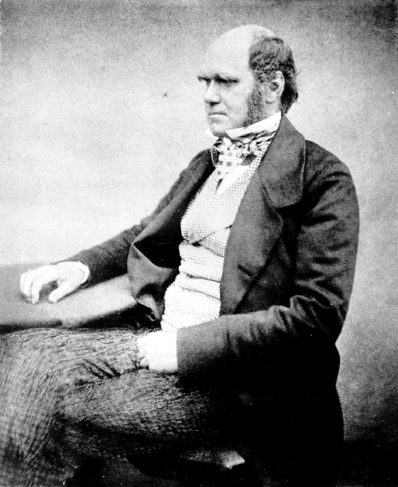 Darwin’s grandfathers, Erasmus Darwin and Josiah Wedgwood, were linked through the Lunar Society of Birmingham to Founding Fathers, Franklin and Jefferson. Thomas Paine’s skull was once housed in the vicarage in Darwin’s village of Downe. But another striking coincidence links Charles Darwin to the history of Great Republic. As American freethinker and Illinois orator, Robert Ingersoll wrote in the 1890s:
 “On the 12th of February, 1809, two babes were born—one in the woods of Kentucky, amid the hardships and poverty of pioneers; one in England, surrounded by wealth and culture... One associated his name… with the emancipation of millions, with the salvation of the Republic. He is known to us as Abraham Lincoln. The other broke the chains of superstition and filled the world with intellectual light, and he is known as Charles Darwin.” [link]
 But much else links the two men in addition to their shared birthday. Both opposed slavery—Darwin with passion, Lincoln with action. Darwin wrote just before the British government passed the Slavery Abolition Act in 1833:
 "What a proud thing for England, if she is the first European nation which utterly abolishes it. I was told before leaving England, that after in Slave countries: all my opinions would be altered; the only alteration I am aware of is forming a much higher estimate of the Negro character.”
Over two decades later, Darwin supported Lincoln’s war: “In the long run, a million horrid deaths would be amply repaid in the cause of humanity.”
Lincoln was familiar with and supportive of evolution. His law partner William Herndon wrote:
Lincoln was familiar with and supportive of evolution. His law partner William Herndon wrote:
"About the year 1843 he [Lincoln] borrowed The Vestiges of Creation... and read it carefully... Mr. Lincoln had always denied special creation, but from his want of education he did not know just what to believe. He adopted the progressive and development theory as taught more or less directly in that work" [link].
For both men, there was little in their early life that hinted at later greatness. Darwin flunked out of medical school in Edinburgh and was a wastrel while studying at Cambridge. It took the Beagle voyage to launch him on the trajectory towards greatness. Lincoln was born in a log cabin, worked as shop keeper, then slowly gained a reputation as an eloquent lawyer, rising to fame in Illinois before finally, despite a lack of political experience on assuming office, going on to become one of the greatest American Presidents.
Both men’s rhetoric justified death. Lincoln with
Both men’s rhetoric justified death. Lincoln with
“these dead shall not have died in vain… this nation…shall have a new birth of freedom”
Darwin with
“Thus, from the war of nature, from famine and death, the most exalted object which we are capable of conceiving… directly follows.”
The two men were just two handshakes apart—via abolitionist Moncure Conway or through Lincoln’s biographer/Darwin’s pallbearer James Russell Lowell.
Later American President Woodrow Wilson linked Darwin and Lincoln in the cause of progress and wrote of the US Constitution that
Later American President Woodrow Wilson linked Darwin and Lincoln in the cause of progress and wrote of the US Constitution that
“Living political constitutions must be Darwinian in structure and in practice... All that progressives ask or desire—in an era when "development", "evolution" is the scientific word—is to interpret the Constitution according to the Darwinian principle." [link]
In one of his notebooks, Darwin wrote: “Has not the white man, who has debased his nature by making slave of his fellow Black, often wished to consider him as other animal… I believe those who soar above such prejudices yet have justly exalted nature of man.”
A hundred years to the day after Darwin and Lincoln's joint birthday, W.E.B. du Bois and others established the National Association for Advancement of Colored People.
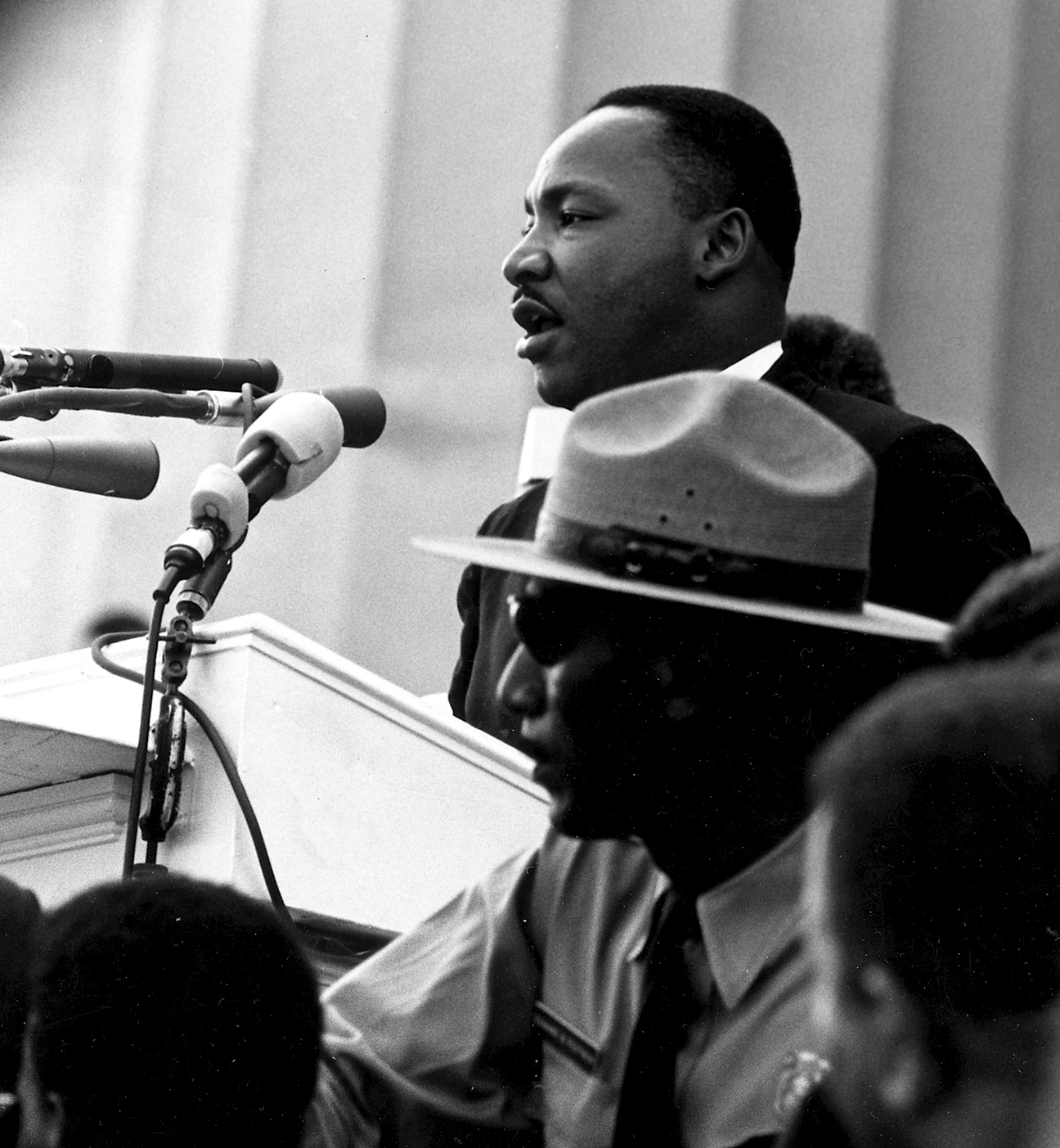
A little over a hundred years after Lincoln's Emancipation Proclamation, Martin Luther King “let freedom ring” in Lincoln’s “symbolic shadow” and dreamt that his "nation will rise up and live out the true meaning of its creed: We hold these truths to be self-evident, that all men are created equal."
Like the early Lincoln, Barack Obama was until recently merely a lawyerly political rookie from Illinois. But in February 2007, Obama declared his candidacy for President of the United States on the very spot where Lincoln delivered his historic "House Divided" speech.
And now, a hundred days before Darwin's and Lincoln's two hundredth birthday, the American people have elected Barack Obama, the first American President of (recent) African origin and a leader comfortable with and worthy of Darwin's and Lincoln's joint legacy. What's more, a modern understanding of human evolution sees all humans as Africans under the skin, linking former slaves and former slave owners together as the scatterlings of Africa and providing the strongest evidence that “All men are created equal”.
And, so, today, American history links Darwin, Lincoln and Obama together in a simple dictum: Freedom evolves!
A hundred years to the day after Darwin and Lincoln's joint birthday, W.E.B. du Bois and others established the National Association for Advancement of Colored People.
A little over a hundred years after Lincoln's Emancipation Proclamation, Martin Luther King “let freedom ring” in Lincoln’s “symbolic shadow” and dreamt that his "nation will rise up and live out the true meaning of its creed: We hold these truths to be self-evident, that all men are created equal."
Like the early Lincoln, Barack Obama was until recently merely a lawyerly political rookie from Illinois. But in February 2007, Obama declared his candidacy for President of the United States on the very spot where Lincoln delivered his historic "House Divided" speech.
And now, a hundred days before Darwin's and Lincoln's two hundredth birthday, the American people have elected Barack Obama, the first American President of (recent) African origin and a leader comfortable with and worthy of Darwin's and Lincoln's joint legacy. What's more, a modern understanding of human evolution sees all humans as Africans under the skin, linking former slaves and former slave owners together as the scatterlings of Africa and providing the strongest evidence that “All men are created equal”.
And, so, today, American history links Darwin, Lincoln and Obama together in a simple dictum: Freedom evolves!
Wednesday, October 22, 2008
2009, Tom Paine's Remains and Darwin

Prompted by Carl Zimmer's recent posting on Paine and Washington's experiment with marsh gas, I have finally gotten around to dealing with a topic on my mind for quite a while....
As a Darwin fan, I named my first two children Charles and Emma. And so a friend groaned when he heard that I called my second son Thomas--he presumed after Thomas Huxley.
But he presumed wrong! In fact, Tom was after my other hero (besides Darwin), Thomas Paine.
Paine was a remarkable character. Born in Thetford, Norfolk, he played a role in both the American and French revolutions. Paine can be said to be the father of the United States of America, not only in naming the country, but in stirring up the revolution with his pamphlet Common Sense. But crucially, he went beyond just trading British national identity for an American one--he recast the colonies' disagreement with the British government and crown as an argument about the very nature of government and society. Not just, should we not have this king, but no one should have any kings anywhere!
Not content with stirring things up in America, Paine a few years later became an enthusiastic supporter of the French Revolution, for which he gained honorary French citizenship. His book supporting the French Revolutionaries, the Rights of Man got him into trouble with the British authorities, so he hot-footed it over to France. But then he fell out of favour with the ruling faction and missed execution only by chance (a mark indicating that he should be guillotined was placed on the wrong side of a door). However, the fear of death brought out arguably his best work, The Age of Reason, which I am currently reading on my iPhone (is just chance that two works by Paine and two by Darwin feature along the few dozen ebooks available as iPhone apps--I sense a freethinkers' conspiracy at work!).
Paine is not remembered only for his remarkable biography, but also because of the remarkable clarity of his prose, which over two centuries on remains a model of plain truth plainly spoken. A read through Common Sense reveals not only a persistent outrageous rudeness towards the British Crown and monarchy in general but a series of memorable one-liners:
But with The Age of Reason Paine scandalized not just the British establishment, but most Americans too. Over 200 years before Dawkins and his God Delusion, Paine laid out the common-sense arguments against Christianity, although Paine retained a belief in a noble creator-deity. As in the previous two works, here Paine often pulls no punches nor makes any effort at politeness towards those he is attacking:
Not content with stirring things up in America, Paine a few years later became an enthusiastic supporter of the French Revolution, for which he gained honorary French citizenship. His book supporting the French Revolutionaries, the Rights of Man got him into trouble with the British authorities, so he hot-footed it over to France. But then he fell out of favour with the ruling faction and missed execution only by chance (a mark indicating that he should be guillotined was placed on the wrong side of a door). However, the fear of death brought out arguably his best work, The Age of Reason, which I am currently reading on my iPhone (is just chance that two works by Paine and two by Darwin feature along the few dozen ebooks available as iPhone apps--I sense a freethinkers' conspiracy at work!).
Paine is not remembered only for his remarkable biography, but also because of the remarkable clarity of his prose, which over two centuries on remains a model of plain truth plainly spoken. A read through Common Sense reveals not only a persistent outrageous rudeness towards the British Crown and monarchy in general but a series of memorable one-liners:
- "...a long habit of not thinking a thing WRONG, gives it a superficial appearance of being RIGHT"
- "Time makes more converts than reason."
- "The cause of America is in a great measure the cause of all mankind."
- "Society is produced by our wants, and government by wickedness"
- "How impious is the title of sacred majesty applied to a worm, who in the midst of his splendor is crumbling into dust!"
- "One of the strongest NATURAL proofs of the folly of hereditary right in kings, is, that nature disapproves it, otherwise, she would not so frequently turn it into ridicule by giving mankind an ASS FOR A LION."
- "The present state of America is truly alarming to every man who is capable of reflexion."
- "When my country, into which I had just set my foot, was set on fire about my ears, it was time to stir. It was time for every man to stir."
- [of a monarchist] "one, who hath, not only given up the proper dignity of a man, but sunk himself beneath the rank of animals, and contemptibly crawls through the world like a worm."
"It is now towards the middle of February. Were I to take a turn into the country, the trees would present a leafless, wintery appearance. As people are apt to pluck twigs as they walk along, I perhaps might do the same, and by chance might observe, that a single bud on that twig had begun to swell. I should reason very unnaturally, or rather not reason at all, to suppose this was the only bud in England which had this appearance. Instead of deciding thus, I should instantly conclude, that the same appearance was beginning, or about to begin, every where; and though the vegetable sleep will continue longer on some trees and plants than on others, and though some of them may not blossom for two or three years, all will be in leaf in the summer, except those which are rotten. What pace the political summer may keep with the natural, no human foresight can determine. It is, however, not difficult to perceive that the spring is begun."
- "All national institutions of churches, whether Jewish, Christian or Turkish, appear to me no other than human inventions, set up to terrify and enslave mankind, and monopolize power and profit."
- "Whenever we read the obscene stories, the voluptuous debaucheries, the cruel and torturous executions, the unrelenting vindictiveness, with which more than half the Bible is filled, it would be more consistent that we called it the word of a demon, than the Word of God. It is a history of wickedness, that has served to corrupt and brutalize mankind; and, for my own part, I sincerely detest it, as I detest everything that is cruel."
"The Christian mythologists tell us that Christ died for the sins of the world, and that he came on Purpose to die. Would it not then have been the same if he had died of a fever or of the small pox, of old age, or of anything else?"or the utter common sense of his arguments--here for example on whether Christ could have died for our sins:
"If I owe a person money, and cannot pay him, and he threatens to put me in prison, another person can take the debt upon himself, and pay it for me. But if I have committed a crime, every circumstance of the case is changed. Moral justice cannot take the innocent for the guilty even if the innocent would offer itself. To suppose justice to do this, is to destroy the principle of its existence, which is the thingitself. It is then no longer justice. It is indiscriminate revenge."or his Carl-Sagan-esque rejoicing in the immensity of the universe and scorn at the parochialism of Christianity:
"Since, then, no part of our earth is left unoccupied, why is it to be supposed that the immensity of space is a naked void, lying in eternal waste? There is room for millions of worlds as large or larger than ours, and each of them millions of miles apart from each other."
"Those fixed stars continue always at the same distance from each other, and always in the same place, as the Sun does in the center of our system. The probability, therefore, is that each of those fixed stars is also a Sun, round which another system of worlds or planets, though too remote for us to discover, performs its revolutions, as our system of worlds does round our central Sun. By this easy progression of ideas, the immensity of space will appear to us to be filled with systems of worlds; and that no part of space lies at waste, any more than any part of our globe of earth and water is left unoccupied..."It is hard to imagine the effect if all Americans were made to study all of Paine's work in school, including the Age of Reason! But I guess that would be disallowed under the First Amendment.
"From whence then could arise the solitary and strange conceit that the Almighty, who had millions of worlds equally dependent on his protection, should quit the care of all the rest, and come to die in our world, because, they say, one man and one woman had eaten an apple! And, on the other hand, are we to suppose that every world in the boundless creation had an Eve, an apple, a serpent, and a redeemer? In this case, the person who is irreverently called the Son of God, and sometimes God himself, would have nothing else to do than to travel from world to world, in an endless succession of death, with scarcely a momentary interval of life."
And I digress...
What has all this to do with Darwin?, I hear you ask. Well, I discovered the answer in a book entitled The Trouble with Tom by Paul Collins.
As Collins points out, the publication of Paine's Age of Reason in America turned him from national hero to villain very quickly. He died in June 1809 (his life thus overlapping with Charles Darwin's by just a few months) and as the ever-eloquent Ingersoll (another American hero who all Americans should read) puts it:
Thomas Paine had passed the legendary limit of life. One by one most of his old friends and acquaintances had deserted him. Maligned on every side, execrated, shunned and abhorred -- his virtues denounced as vices -- his services forgotten -- his character blackened, he preserved the poise and balance of his soul. He was a victim of the people, but his convictions remained unshaken. He was still a soldier in the army of freedom, and still tried to enlighten and civilize those who were impatiently waiting for his death. Even those who loved their enemies hated him, their friend -- the friend of the whole world -- with all their hearts. On the 8th of June, 1809, death came -- Death, almost his only friend.No minister of religion would allow Paine to be buried on consecrated ground and so he was interred on his own farmland in upstate New York, neglected hero of the American Revolution...
At his funeral no pomp, no pageantry, no civic procession, no military display. In a carriage, a woman and her son who had lived on the bounty of the dead -- on horseback, a Quaker, the humanity of whose heart dominated the creed of his head -- and, following on foot, two negroes filled with gratitude -- constituted the funeral cortege of Thomas Paine.
But then Tom Paine's remains took on a strange afterlife, when an English radical William Cobbett adopted Paine as an English hero and in 1819 dug up his bones and returned them to England, in the hope of building a fittingly grand tomb for them. Instead, they mouldered away in a trunk in Cobbett's attic and then became separated from one another, with the skull and a right hand going their own way...
And, guess where, in Paine's vast universe of millions of worlds, they ended up...?
...in the Kent village of Downe, in a house called Tro[w]mer Lodge, owned by Charles Darwin's daughter Elizabeth and situated a few hundred yards from the more famous Down House. As Collins recounts, Paine's skull was for a few years in the mid-19th Century in the possession of a country parson, Reverend Robert Ainslie, who rented Trowmer Lodge from Elizabeth Darwin. The skull is no longer there, but the building is.
Of course, none of this counts as anything other than coincidence. I can find no evidence that Darwin ever read Paine (although the Darwin Correspondence project shows two of his correspondents did: Joseph Hooker and Matthew Patrick), let alone knew that Paine's skull was just up the road as he wrote The Descent of Man. But, just as Stephen Jay Gould used to delight in the happy coincidence that two of his heroes, Darwin and Lincoln, were born on the very same day, I relish this slightly ghoulish connection between two of my heroes!
So, next year in the midst of all the celebrations of Darwin200, of the joint bicentenary of Darwin's and Lincoln's births, spare a thought for Thomas Paine, citizen of the world and father of the USA and do something to commemorate this great man on the bicentennary of his death, June 8th 2009. And American readers, as you elect a new president, spare a thought for us poor Brits, who two hundred years after Paine's death, still have to live under the yoke of the British crown and the weight of an established church!
For details of UK Paine200 celebrations, see http://www.tompaine200.org.uk/.
Wednesday, August 27, 2008
Wikipedia and the question of who owns Darwin
We live in age where "information wants to be free" and steadily ever more information that one used to have to pay for is now available online free of charge, from maps to bibliographic databases such as Medline to scientific articles themselves. But "free to look at" does not mean "free to use for whatever purpose one likes", and what happens when two online giants of the information age (Wikipedia and Darwin Online) collide?
The Wikipedia must surely rate as one of the seven wonders of the Internet. But although simple in concept--an encyclopedia in which anyone can create and edit material--in fact, it has grown to be a highly complex trans-national organisation, with its own culture and customs. Beneath the simple exterior of the wiki article lies a complex machinery of rules, edits, discussions and guidelines...
A couple of times when I have tried to contribute myself, I have come away somewhat disgruntled--once over the neutering suffered by the no-bacteria-on-the-moon article mentioned in an earlier post and on another occasion, when I tried to create an entry for Charles Darwin 1st (1758-1778), the uncle of the more famous CD and the son of Erasmus Darwin. Before I had even finished the article, a notice was slapped on, saying that the article was likely to be deleted very soon on grounds of lack of notability--a decision made by someone whose credentials one could only guess at!
But although my own experiences have led me to have mixed feelings about the Wikipedia, I marvel at the effort put in behind the scenes in terms of arguments for or against a given position on what should be included. There is something magical here with the Wikipedia, as I know from experience that attempts to get research communities to engage in community annotation or maintenance of subject-specific wikis (e.g. the E. coli wiki) usually collapse in apathy, as academics say they are just too busy to contribute. How is it that the Wikipedia manages to enlist so much support from so many unpaid volunteers! And how do these people find the time for all this, when academics are so busy?
A couple of examples suffice to illustrate the remarkable internal machinations of the Wikipedia:
1. In one of the Wikipedia's lamest edit wars, the issue of whether the fact that Darwin and Lincoln were born on the very same day is notable enough for inclusion in their respective Wikipedia entries has generated the equivalent of a short novel's worth of words of discussion! See further discussion on the I'm-from-Missouri blog.
2. Just this morning I came across this protracted and fascinating discussion as to whether John van Wyhe at Darwin Online is able to assert copyright on the images scanned from out-of-copyright printed works. This issue has a particular interest for me, as we explored whether we could afford to use some of John's images in The Rough Guide to Evolution in the light of the tight budget we had been allotted for pictures. In a nutshell, the argument is whether the Wikipedia and its sister resource, Wikimedia Commons, has the right to appropriate these images from John's Darwin Online site without his permission and without payment on the grounds that the images are in the public domain.
John argues that the act of scanning creates copyright, at least in English law. Various wikipedians argue that mechanical processes that do not add originality do not create copyright where none exists to start with; that English copyright law does or does not allow for "sweat of the brow" efforts; that the Wikipedia should or should not ignore English law and so on!
John, perhaps wisely, has refused to take part in the discussions--he is busily writing or editing several books on Darwin (working on one book has been exhaustive enough for me!). In the end, the wikipedians seem to have side-stepped the issue by starting to scan in their own images, and so I am left unclear what the precise legal position is. One elephant-in-the-room argument that they haven't addressed is whether changing an image from a paper format to a digital format creates copyright. Or does this not make any difference?
The question of who owns Darwin goes deeper than these arguments over copyright of images. Cambridge University claims to own the copyright on all Darwin's letters, whether held by the University or in private hands. This seems a bit odd to me, as when Darwin sent someone a letter, one would have thought that the recipient gained ownership of the letter and perhaps even copyright of what was in it. I wonder what case law exists on this.
One thing is clear, in the Internet age, who owns Darwin remains a highly contentious point!
Subscribe to:
Posts (Atom)