Monday, June 22, 2009

Emma Darwin's poignant diary entry

I am still slowly but surely working away on a paper debunking the myth that Annie Darwin's death had anything to do with Charles Darwin's loss of faith in Christianity. And in preparing the paper, I have been looking at the diaries of Charles Darwin and of Emma Darwin, his wife.

There has been quite a bit of publicity about the recent publication of Emma's diaries, but I didn't realise until recently that Charles Darwin also kept a journal of his life (see the Introduction by John van Wyhe). Darwin started keeping the journal in 1838, but backdated the entries to his birth, and made the last entry just four months before his death.

In researching the background to Annie's final illness and death, I took a look at both diaries. Annie Darwin fell ill in the summer of 1850, as is evidenced by this entry from Emma's diary for 27th June:
"Annie first failed about this time"
She was taken to Malvern by Charles on March 24th 1851, in the hope that she would benefit from Dr Gully's water cure. Charles records this and the subsequent tragic events on a single poignant page in his diary:
"March 24th to Malvern with Annie & Etty. returned home 31st.— April 16th. started for Malvern. April 23d our dear child expired. 24th. I returned to Emma. Our darling was born March 2d. 1841.—"
Emma in her diary maintains a progress report on Annie,  gleaned from the letters sent by Dr Gully and by Charles. Unlike most of her diary entries, which tend to be rather terse, her entries on Annie are more informative than usual. On 7th April she writes "Annie's sickup"; on 13th April: "Annie very weak"; on April 14th "Better, Dr G. said she had turned the corner"; on April 15th: "Dr G alarmed, wrote for Ch./ began urine". 

I will leave it to you the reader to follow Emma's records of Annie's illness through these links to individual pages for each week:

But for me Emma's entry on Annie's death is the most poignant of all these diary entries, whether from Charles or Emma. After writing "much better" on April 21st and "diarrhea came on" on April 22nd, for April 23rd, she writes simply:
"12 o'clock"
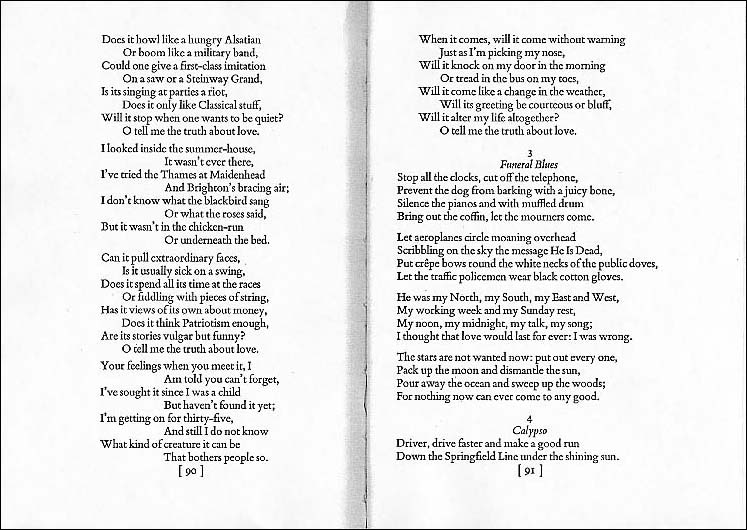
the time of Annie's death. This reminds me of Auden's poem, Funeral Blues: "Stop all the clocks..." and, for me, nothing in any of the accounts of Annie's illness and death could be more arresting.

Wednesday, June 17, 2009

Please help Darwin's medical students URGENTLY! #2

This week for the second time (see earlier posting) I have been supervising a student-selected activity entitled "The Darwins, Evolution and Medicine". The rationale for these SSAs is to stimulate curiosity and critical thinking among medical students, who are otherwise burdened with a great deal of rote learning. There are fourteen students on the course and I offered them a selection of topics, which ranged from the matter-of-fact to the highly controversial. Here are the topics they chose:
  • The illness of Charles Darwin: a retrospective diagnosis
  • Charles and Emma- Benefits and Hazards of First Cousin Marriages
  • The Pleistocene diet: a recipe for diet and health?
  • Why do Europeans, North Asians and Native American have pale skins
  • How can we explain the course of the recurrent laryngeal nerve
  • Tay-Sachs disease in Ashkenazi Jews: Origins and Prevention
  • Darwin and slavery
The students have been given the option of delivering a conventional powerpoint presentation tomorrow morning or posting on a purpose-built blog Darwin's students, by 7 pm tonight. I offered this latter option as an incentive for them to explore and evaluate the blogosphere as a tool for academic research. 

Please feel free to look at what they have written and provide constructive comments on their postings, links to other postings or literature etc etc just as if they were regular bloggers! As I explained to them, in a real sense, blogging is more peer-reviewed than the regular scientific literature, as dozens or even hundreds of people can comment. BUT be gentle with them—this is their first foray into the blogosphere!

Tuesday, June 16, 2009

The amazing power of Darwinite

You remember Superman and how he suddenly lost all his powers in the presence of the element kryptonite? Well, I am beginning to wonder if there isn't an element called Darwinite out there that means people lose their critical faculties and say and write and believe any old rubbish when face to face with Darwin, his life and his theory of evolution. 

I have already pointed out some of the many myths surrounding this topic, but the more I read about the myth of Annie's-death-caused-Darwin's-loss-of-faith, the more I am driven to believe in this powerful but hidden element, Darwinite.

Before I start on the Annie myths, let me point out that Darwinite is clearly inherited, as proven by this piece written by CD's great-great-grand-daughter Emma Darwin, where the diluted Darwinite in her veins is still able to induce hyperventilation in a healthy human male:

Let me give just two examples from the Annie mythos:

1. In his Autobiography, Darwin admits that 
"later in life I wholly lost, to my great regret, all pleasure from poetry of any kind, including Shakespeare".
Well, lot's of people go off poetry in later life or get cheesed off with Shakespeare-it's part of becoming a grumpy old man. But exposure to Darwinite ensures that American English professor, George Levine, comes up with an explanation custom-built for Darwin in his book Darwin Loves You. It goes like this: 
  • Annie Darwin died on April 23rd 1851. 
  • Which happens to be Shakespeare's birthday
  • So the memory of her death meant that Darwin developed a life-long downer on Shakespeare! 
It has just got to be true (not)!

2. Without Darwinite poisoning, how else could anyone write the kind of twaddle that ends Jim Moore's publication (Of Love and Death: Why Darwin 'gave up Christianity'’ in Jim Moore ed., History, Humanity and Evolution. pp. 195-229, Cambridge, 1989) that kicked off the Annie myth? As opium was to Coleridge's poetry, so it seems Darwinite is to Moore's prose. Be warned this is strong stuff!
"He ends the chapter in search of a palliative: 'We may console ourselves with the full belief, that the war of nature is not incessant, that no fear is felt, that death is generally prompt, and that the vigorous, the healthy, and the happy survive and multiply.' But the words ring hollow. Why should consolation be sought unless some one has been bereaved? And can bereavement be so readily assuaged? Nature is the victim in Darwin's figure, but nature is also given a 'face', a face 'bright with gladness', to which death comes promptly without fear. Only one face in Darwin's experience ever did that. He could recall it 'with much distinctness' - 'her eyes sparkled brightly; she often smiled' - and he had the imaginative ability with bygone faces to make them 'do anything I like' Here, then, nature may be tortured that health and happiness should prevail, but the face is also sacrificed for the redemption of the world. The bereavement is finally his own; the real victim, tragically, a child already perfect. Annie, who died at Easter, became the paschal lamb of Darwin's post-Christian evolutionary soteriology."
And how many of you didn't have to look up that last word!!

Monday, June 15, 2009

In The Light of Evolution III

The current early edition of the Proceedings of the National Academies of Sciences of the USA has just been released and is chock full of articles on evolution from a recent colloquium:

Sunday, June 14, 2009

New review of The Rough Guide to Evolution

Fyrefly has just posted a review of The Rough Guide to Evolution  here. Generally highly positive, although Fyrefly doesn't like the way people are highlighted in bold, e.g Charles Darwin (1809-1882), but this is Rough Guides house style, I'm afraid.

Thursday, June 11, 2009

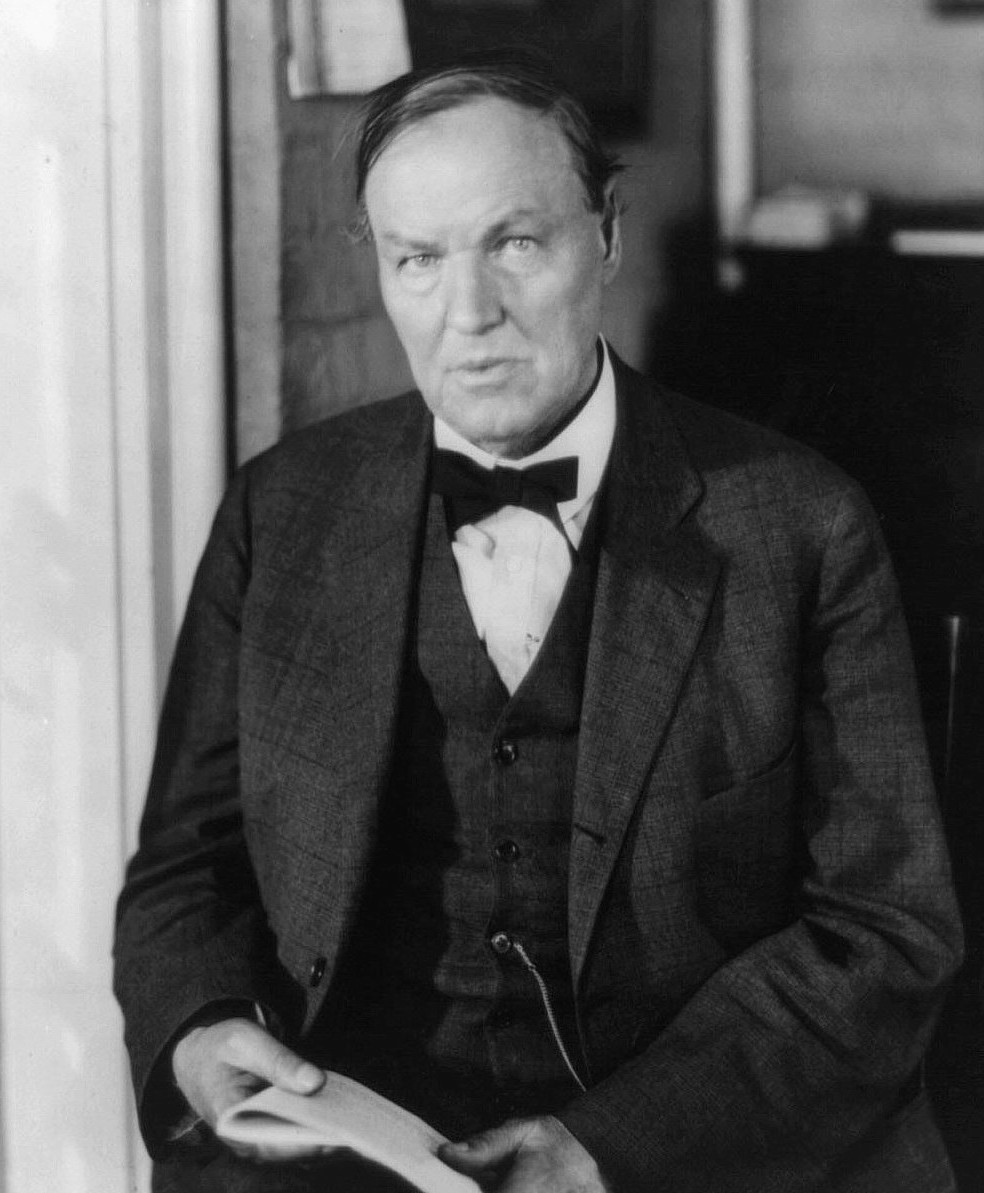
Clarence Darrow (1857-1938): greatest trial lawyer of all time

The Guardian today features a piece by Donald McRae entitled The Great Defender, which details the remarkable courtroom skills of Clarence Darrow. Those interested in evolution will be familiar with Darrow's pivotal role in the Scopes Monkey—here is the relevant section from The Rough Guide to Evolution:

The trial ran for less than a fortnight, but attracted unprecedented media attention with over two hundred reporters and the first ever radio broadcast of judicial proceedings. Acerbic Baltimore Sun reporter H.L. Mencken presented the trial to the public in colourful turns of phrase such as “the infidel Scopes” or “the monkey trial” [NOTE added to blog: the discerning reader will note another link here between the show, The Wire, and Darwin's legacy]. The prosecution called just four witnesses to establish that Scopes had broken the law. The defence tried to field eight expert witnesses to establish that there was no conflict between evolution and the Bible. However, the prosecution argued – and Judge John Raulston accepted – that such expert opinion was irrelevant to the question of whether Scopes had actually taught about evolution. After Bryan snuck in a jibe that humans were descended “not even from American monkeys, but from old world monkeys” defence lawyer Malone delivered a dramatic speech, seen as the highpoint of the trial, passionately arguing that the Bible belonged to the realm of theology and morality rather than to science.

Towards the end, the trial took a bizarre twist as Darrow questioned Bryan as a witness to the authenticity of the Bible. Sparks flew in the resulting exchange, with Darrow using phrases like “your fool religion” and declaring (presciently, given later history): “We have the purpose of preventing bigots and ignoramuses from controlling the education of the United States.” To prevent Bryan from summing up, Darrow waived his own right to a closing statement. Instead, Darrow asked the judge to bring the jury in and instruct them to return a guilty verdict, which they did after just nine minutes deliberation. The judge fined Scopes the minimum allowed: just $100.

What I didn't know before I read the Guardian article was Darrow's role in two other high-profile court cases, the Leopold and Loeb trial (Darrow's summation, an eloquent attack on anti-capital punshment, which moved the judge to tears, can be found here) and the trial of African-American physician Dr Ossian Sweet (read Darrow's account of it here).

The author of the Guardian article, has a book out on Darrow: The Old Devil: Clarence Darrow: The World's Greatest Trial Lawyer, while the Clarence Darrow home page is stuffed full of information and links about Darrow.

Oh and here is a question for you: what's the link between Clarence Darrow and Claire Bennet from the cult show Heroes?

Wednesday, June 10, 2009

Darwin podcasts from the Fitzwilliam Museum

The Fitzwilliam Museum in Cambridge (which Darwin frequented), is next week launching an exhibition, Endless Forms, to celebrate the Darwin bicentennial. 

To accompany the exhibition, the Fitzwilliam has produced a series of fascinating podcasts, including most recently an account of Darwin's time in Cambridge from my friend John van Wyhe. Note the sly reference in John's talk to the myth of Annie Darwin and Darwin's loss of faith: watch this space for more on this issue!

Tuesday, June 9, 2009

Latest news from Simon Singh

For those of you interested in Simon Singh's struggle with the British Chiropractic Association and the English legal system, Simon has written a nice summary of the history of the case, the issues involved and his determination to continue here:

Thursday, June 4, 2009

Darwin, the "Missing Link" and raucous students

There has been much talk in the blogosphere about the hyping up of Darwinius as a "missing link" (summarised here by Carl Zimmer). And Harry Gee has been delving into the history of the term, as has Carl's brother Ben. 

On reading all this, my curiosity was piqued as to whether Darwin ever used the term "missing link"....?

A few minutes searching on Darwin Online and on the Darwin Correspondence Project reveals that he did not. But interestingly, the term does feature in several letters written to Darwin, but not always in the sense of an intermediate between humans and apes:
  • Librarian Mary Boole wrote to Darwin in Dec 1866: "I felt that you had supplied one of the missing links,—not to say the missing link,—between the facts of Science & the promises of religion." 
  • In a letter dated 12 July 1871, Otto Kratz sent Darwin photographs of very hairy Burmese natives and suggested that they may be the "missing link".
  • Geologist  Frederic William Harmer quotes an opponent of Darwin, Frederick Bateman of Norwich in 1872: "I was unwise enough to reply to the latter, that a theory was not disproved by a mere objection being urged against it, & also to attempt to explain that an argument which he rested great weight upon, viz. the non production of the missing link, was valueless, owing to the imperfection of the geological record"
  •  In 1877, one of Darwin's shipmates on the Beagle, Arthur Mellersh writes to ask Darwin whether "the missing link" been found in New Guinea, as he read in the newspaper.
  • Also in 1877 comes perhaps the first sinister racist use of the term in  a letter from W. B. Bowles, who tells Darwin he 'believes "missing link" between higher mammals and man consists of a race of "speaking monkeys" – akin to Africans – who pollute blood of better race and impede civilisation'.
A search on Darwin Online also pulls up an interesting use of the term in recollections of Darwin  collecting an honorary LLD degree from the University of Cambridge in 1877. The first is from John Neville Keynes, the economist father of John Maynard Keynes:
"The honorary degree of LLD was conferred upon Darwin in the Senate House amidst a scene of some disorder. The building was crammed, floor and galleries, the undergraduates being chiefly in the galleries; and it was of course an occasion on wh. undegraduate wit felt bound to distinguish itself. The chief pleasantry consisted of a monkey swung across by strings from gallery to gallery, which monkey was in the course of the proceedings to have been changed into a man. Before however this desirable consummation was reached, the representative of the original ancestor, (than whom he was less fortunate), was seized by one of the proctors, & thus prevented from fulfilling his high destiny. The perpetrators of the joke were very wrath, & vented their fury chiefly in groans for Humphreys, the most unpopular of the proctors. He was also made the butt of such remarks as this, Would Dr. Darwin kindly afford us some information regarding the ancestors of Mr. Humphreys? — a sally which took amazingly. Sandys, the public orator, introduced Darwin, according to custom, in a rather long Latin oration, wh. was delivered amidst a ceaseless fire of interruptions, (chiefly feeble), from the wittiest of the undergraduates. Sandys (I imagine inadvertently) made use of the word apes, & then the cheering was enormous. Darwin bore himself in a rather trying position with remarkable dignity; but I heard afterwards that his hand shook so much while he was signing the registry, that his signature was scarcely legible. Another emblem swung from the galleries was a large ring of iron, adorned with ribbons, supposed to represent the missing link. It was ultimately swung down into the lap of one of the lady visitors, who pluckily cut it down and appropriated it, amidst tremendous applause. I afterwards found that this courageous lady was Miss Borchardt."
A second account of the same event is recorded in a letter from Emma Darwin to her son William

CAMBRIDGE, Sunday mg., Nov. 17th, 1877.

MY DEAR WILLIAM,

It was a great disappointment your not coming yesterday to witness the honours to F., and so I will tell you all about it.

Bessy and I and the two youngest brothers went first to the Senate House and got in by a side door, and a most striking sight it was. The gallery crammed to overflowing with undergraduates, and the floor crammed too with undergraduates climbing on the statues and standing up in the windows. There seemed to be periodical cheering in answer to jokes which sounded deafening; but when F. came in, in his red cloak, ushered in by some authorities, it was perfectly deafening for some minutes. I thought he would be overcome, but he was quite stout and smiling and sat for a considerable time waiting for the Vice-Chancellor. The time was filled up with shouts and jokes, and groans for an unpopular Proctor, Mr ———, which were quite awful, and he looked up at them with a stern angry face, which was very bad policy. 

We had been watching some cords stretched across from one gallery to another wondering what was to happen, but were not surprised to see a monkey dangling down which caused shouts and jokes about our ancestors, etc. A Proctor was foolish enough to go up to capture it and at last it disappeared I don't know how. Then came a sort of ring tied with ribbons which we conjectured to be the "Missing Link." At last the Vice-Chancellor appeared, more bowing and hand-shaking, and then F. was marched down the aisle behind two men with silver maces, and the unfortunate Public Orator came and stood by him and got thro' his very tedious harangue as he could, constantly interrupted by the most unmannerly shouts and jeers; and when he had continued what seemed an enormous time, some one called out in a cheerful tone "Thank you kindly." At last he got to the end with admirable nerve and temper, and then they all marched back to the Vice-Chancellor in scarlet and white fur, and F. joined his hands and did not kneel but the Vice-Chancellor put his hands outside and said a few Latin words, and then it was over, and everybody came up and shook hands."

It's nice to see that students at Cambridge were just as raucous back then as they are today!

Wednesday, May 27, 2009

From the Origin of Species to the origin of infection

This article has just appeared in a special Darwin 200 issue of Microbiology Today, where you can obtain a PDF of this piece and much more besides. But they have given me permission to post it here too, where it benefits from hypertext links for the interested reader.

From the Origin of Species to the origin of infection
2009 marks the bicentenary of the birth of Charles Darwin and the 150th anniversary of the publication of On the Origin of Species by Means of Natural Selection. The impact of Darwin’s theory of evolution by natural selection is felt throughout biology and even beyond it — in disciplines as diverse as computer science and cosmology. Darwin’s theory is widely touted as ‘the best idea anyone ever had’ and arguably ranks as the most influential change in human thought in modern times (although as microbiologists, we may wish to claim that the germ theory of infection is of more practical significance).

What about Darwin and microbiology? Antibiotic resistance is widely cited as a tangible example of Darwinian evolution. But Darwin himself lived through the birth of our discipline, so it is not surprising to learn that there are links between Darwin and the founding fathers of microbiology.

Darwin and natural selection

Charles Darwin was born and schooled in Shrewsbury, an English market town close to the Welsh border. He tried, and ducked out of, a medical education in Edinburgh, then studied at Cambridge with a view to joining the clergy. But his reputation as a naturalist earned him a place on a round- the-world trip on HMS Beagle, which primed him for his revolutionary ideas on evolution. He started to formulate his thoughts on evolution shortly after his return from the Beagle voyage, recording a riot of ideas, sometimes earthy or even vulgar, in a series of notebooks. For inspiration on his ideas of the struggle for existence and natural selection, he drew on the work of Robert Malthus, who had suggested that human populations always eventually out-run the means to sustain them. Darwin outlined his theory in a ‘pencil sketch’ of 1842 and an essay of 1844, but, preoccupied with other work, delayed publication until the late 1850s, when he was spurred into action by the rival work of Alfred Russel Wallace.

In On the Origin of Species by Means of Natural Selection, first published in 1859, Darwin eloquently (and presciently, given its subsequent influence on antibiotic resistance) emphasizes the remarkable power of natural selection:
‘We have seen that man by selection can certainly produce great results, and can adapt organic beings to his own uses, through the accumulation of slight but useful variations, given to him by the hand of Nature. But Natural Selection, as we shall hereafter see, is a power incessantly ready for action, and is as immeasurably superior to man’s feeble efforts, as the works of Nature are to those of Art.’ [link]
Later, in Variation Under Domestication [note: not The Descent of Man as stated in PDF], despite his ignorance of the nature of inheritance, Darwin points out that the variation that is a prerequisite of natural selection originates independently of the selection itself.

In the decades after his death, while Darwin’s ideas of evolutionary change and common ancestry were widely accepted, his principal mechanism for change, natural selection, was not. However, in the mid-20th century, Darwin’s intellectual legacy was reconciled with Mendelian genetics in what is often called ‘The Modern Synthesis’. As part of this reconciliation, bacteria were brought into the broader evolutionary genetic framework, principally through the experiments on the genetics of phage susceptibility published by Salvador Luria and Max Delbrück in 1941. In their famous fluctuation test, Luria and Delbrück confirmed Darwin’s hunch that variation precedes selection, rather than arising in response to it, and thrust bacteria centre stage as biological entities with fully-fledged genetics. A few years later, in 1945, Milislav Demerec repeated the fluctuation test on penicillin resistance in Staphylococcus aureus, showing for the first time the awesome power of natural selection to curtail our biochemical victories over micro-organisms.

Darwin and Pasteur

Shortly after Darwin published The Origin, in Paris, Louis Pasteur performed a series of experiments that demolished the theory of spontaneous generation. Darwin was well aware of the on-going controversy. In 1860, in a letter to his friend Lyell, he refers to the work of Pasteur’s rival Pouchet:
‘I have seen something about the infusorial experiments in Paris: Quatrefage objected to their accuracy. Some old experiments were several years ago tried in Germany with astonishing precautions (air all passed through sulphuric acid & caustic potash) and infusoria never appeared.’
A few years later in 1863, he wrote to the English botanist George Bentham:
‘I am very glad that you are going to allude to Pasteur; I was struck with infinite admiration at his work.’
In disproving spontaneous generation, Pasteur might be seen as undercutting Darwin’s theory of evolution by removing a mechanism for the generation of the first life forms. However, Darwin was sharp enough to realize that the conditions under which life first originated were likely to be quite different from those around today. In 1871, he wrote to his botanist friend Joseph Hooker:
‘It is often said that all the conditions for the first production of a living organism are now present, which could ever have been present. But if (and oh! what a big if!) we could conceive in some warm little pond, with all sorts of ammonia and phosphoric salts, light, heat, electricity, etc., present, that a proteine [sic] compound was chemically formed ready to undergo still more complex changes, at the present day such matter would be instantly devoured or absorbed, which would not have been the case before living creatures were formed.’
As far as I am aware, Pasteur never made any direct reference to Darwin, although he opened his 1864 address to the Sorbonne on spontaneous generation with these expressive lines:
‘Great problems are in question today, keeping every thinking man in suspense: the unity or multiplicity of human races, the creation of man 1,000 years or 1,000 centuries ago; the fixity of species, or the slow and progressive transformation of one species into another…’
Half a century later, an essay in Science magazine concluded:
‘Darwin, master of the organic world sleeps near Newton, master of the inorganic, in the great [Westminster] Abbey, among the most famous of his race. Pasteur rests alone in the chapel of his laboratory … Both rest forever among the immortals. the last half of the nineteenth century may well be called their age “the Age of Darwin and Pasteur”.’

Darwin, Cohn and the origin of infection

Darwin maintained an extensive network of correspondents. Among them was the German Jewish botanist and bacteriologist, Ferdinand Cohn (1828–1898), who is widely recognized as the father of bacterial taxonomy. Cohn was the first to classify bacteria according to their microscopic appearance and the first to describe sporulation in Bacillus. He was instrumental in publishing Robert Koch’s work on Bacillus anthracis.

From 1874 until 1882, Darwin and Cohn maintained a lively correspondence, principally on botany. On 26 September 1876 Darwin writes to invite Cohn and his wife to visit him at Down House. And then, the very next day, Darwin writes to his son Frank, saying that he hopes they will not come! Apparently the subsequent visit was a success. However, for microbiologists, one particular exchange of letters stands out. In January 1878, Cohn writes to Darwin, discussing Koch’s recent discovery of the anthrax bacillus. Darwin’s response is a triumphant celebration of the birth of medical microbiology:
‘I thank you sincerely for your most kind letter and I return your wishes for the New Year with all my heart. Your letter has interested me greatly. Dr Sanderson showed me some admirable photographs on glass by Dr Koch of the Organisms which cause Splenic Fever. But your letter and the valuable work which you have given me make the case much clearer to me. I well remember saying to myself between 20 and 30 years ago, that if ever the origin of any infectious disease could be proved, it would be the greatest triumph to Science; and now I rejoice to have seen the triumph.’ 
Further reading

Darwin, C. (1859). On The Origin of Species By Means of Natural Selection. London: John Murray.

Pallen, M. (2009). The Rough Guide to Evolution. London: Rough Guides.

Creager, A.N.H. (2007). Adaptation or selection? Old issues and new stakes in the postwar debates over bacterial drug resistance. Stud Hist Phil Biol Biomed Sci 38, 159–190.

Sedgwick, W.T. (1923). Darwin and Pasteur: an essay in comparative biography. Science 52, 286.

http://darwin-online.org.uk – The complete works of Charles Darwin online. http://www.darwinproject.ac.uk – Darwin Correspondence Project

Sunday, May 24, 2009

The Origin of Species as an organism: census, taxonomy and evolution

Last Friday, John van Wyhe, creator of Darwin Online, visited me in Birmingham. He gave a nice seminar on Darwin's Delay (or lack of it: see John's paper on this topic), which covered familiar ground for me. But one interesting topic that cropped up in our discussions, which I was unaware of, was a census of all first editions of The Origin, due to culminate in November in time for the book's 150th anniversary

Following John's advice, I tracked down this description of the census on Darwin Online. The census reminds me of a similar effort to track down all extant copies of Copernicus's masterwork De Revolutionibus, which I read about a copies of years ago in The Book Nobody Read, by Owen Gingerich.

This new census of The Origin falls into a line of thinking that has been rattling around for quite a while. Just as Darwin placed variation between organisms within a species centre stage in biology as the very seed corn of evolution by natural selection, it is also important to recognise that documents also evolve by descent with modification—and The Origin of Species is no exception! 

In Darwin's lifetime, there were six different editions authored by him, with numerous small and large differences from one edition to the next. These differences were collated in a printed variorum by Morse Peckham around fifty years ago (now available online via Google books). My colleagues at the University of Birmingham Barbara Bordalejo and Peter Robinson are working on a digital variorum.

But another key facet of The Origin's evolution that intrigues me is just how much of it was written over fifteen years before 1859 in two short documents, Darwin's 1842 Pencil Sketch and 1844 Essay. It is interesting to take favourite passages from the Origin and see their ancestors in those earlier drafts. Here are is the most obvious example, the closing words:
"There is a simple grandeur in the view of life with its powers of growth, assimilation and reproduction, being originally breathed into matter under one or a few forms, and that whilst this our planet has gone circling on according to fixed laws, and land and water, in a cycle of change, have gone on replacing each other, that from so simple an origin, through the process of gradual selection of infinitesimal changes, endless forms most beautiful and most wonderful have been evolved." 1842 Pencil Sketch. 
"There is a [simple] grandeur in this view of life with its several powers of growth, reproduction and of sensation, having been originally breathed into matter under a few forms, perhaps into only one, and that whilst this planet has gone cycling onwards according to the fixed laws of gravity and whilst land and water have gone on replacing each other—that from so simple an origin, through the selection of infinitesimal varieties, endless forms most beautiful and most wonderful have been evolved." 1844 Essay
"There is grandeur in this view of life, with its several powers, having been originally breathed into a few forms or into one; and that whilst this planet has gone cycling on according to the fixed law of gravity, from so simple a beginning endless forms most beautiful and most wonderful have been, and are being, evolved." The Origin of Species, First Edition. NB: in the 2nd edition "by the Creator" is introduced after "originally breathed."
But the new census of the first edition hammers home the differences not just between editions, but also between copies of the very same edition. Start off by taking a look at the census guide for a panoply of features that can be used to classify a copy of The Origin as a First Edition. A key hallmark is the misspelling of species on p. 20:
There can be no doubt that a race may be modified by occasional crosses, if aided by the careful selection of those individual mongrels, which present any desired character; but that a race could be obtained nearly intermediate between two extremely different races or speceies, I can hardly believe. The Origin, First Edition, Page 20. 
But look at all the other minute differences, for example in the binding:
  1. If there is a full stop after MURRAY at the bottom of the spine, it is a 2nd or 3rd edition binding. 
  2. If the letters at the bottom of the spine are short and square (as opposed to tall and thin), it is a 2nd edition binding. 
  3. If the second N in LONDON is slightly lower than the other letters, it is a 3rd edition binding. 


And there are differences even within the first edition!
For original bindings there are two variants, the difference being the width of LONDON. In the first variant, LONDON at the bottom of the spine is 16mm wide; in the second variant, it is 18mm.
I will leave it to the train-spotters among you to look at the guide for all the minutiae;-) 

But those who prefer more human stories behind the history of the copies of the first edition take a look at this article from the New York Times: Digging for Darwin.

And perhaps I should close with a new variant of the ending of the Origin:
"There is grandeur in this view of The Origin of Species, with its several powers, having been originally breathed by Darwin into a few forms or into one; and that whilst this planet has gone cycling on according to the fixed law of gravity, from so simple a beginning endless editions and variants most beautiful and most wonderful have been, and are being, evolved!"

Very gradual change we can believe in

I just came across this fantastic poster/T-shirt image, created by Mike Rosulek at the University of Illinois. Lyell's gradualism meets Shepard Fairey's Obama poster! (hat tip: Nick Loman)

There are several more variations on a theme on Mike's blog, one of them let down by a misquote (a Darrow quote, often erroneously attributed to Darwin). And why is Darwin always an old man in any iconography?! We should learn to appreciate the young frisky Darwin epitomised by Anthony Smith's recent sculpture!

Anyhow, here is my selection of Darwin "change" quotes that Mike might like to try on later versions of poster:
  • "Over all these causes of Change I am convinced that the accumulative action of Selection, whether applied methodically and more quickly, or unconsciously and more slowly, but more efficiently, is by far the predominant Power." Origin p. 43
  • "We see nothing of these slow changes in progress, until the hand of time has marked the long lapse of ages, and then so imperfect is our view into long past geological ages, that we only see that the forms of life are now different from what they formerly were." Origin p.84
  • "I can see no limit to the amount of change, to the beauty and infinite complexity of the coadaptations between all organic beings, one with another and with their physical conditions of life, which may be effected in the long course of time by nature's power of selection." Origin p. 109
  • "I doubt whether species under nature ever undergo abrupt changes." Origin p. 454
  • "geology plainly declares that all species have changed; and they have changed in the manner which my theory requires, for they have changed slowly and in a graduated manner." Origin p. 465
  • "species have changed, and are still slowly changing by the preservation and accumulation of successive slight favourable variations." Origin p. 480

And if you prefer to draw on the alternative Obama Hope poster for an analogous Darwin image, how about this quote:
"We shall never, probably, disentangle the inextricable web of affinities between the members of any one class; but when we have a distinct object in view, and do not look to some unknown plan of creation, we may hope to make sure but slow progress." Origin p. 434

Friday, May 15, 2009

Rough Guide to Evolution in the Malvern Gazette

My local newspaper, the Malvern Gazette are running a story this week on The Rough Guide to Evolution, complete with my ugly mug. You can pick up the story online here. But for the mugshot, you will have to buy a  print copy!

Friday, May 8, 2009

The Wire, the Darwins, re-ups and the N word

OK, confession time! After the Darwin bicentenary, even as a hardened Darwin fan, I had had my fill of darwinizing*, at least for a while. And after writing, editing and launching The Rough Guide to Evolution, I was a little maxed out on evolution. 

So, what did I do to purge my mind of Darwin and evolution (as a necessary prerequisite for renewing my interest)? Since February, I have watched four series of the excellent cult TV series, The Wire. In fact, this evening I started the first episode of the final fifth series.

But why am I telling you this? Surely, there is no connection between Darwin, evolution and The Wire? Well, according to its originator, David Simon, The Wire draws inspiration from the epic poetry and tragic drama of Ancient Greece (with some not-so-hidden clues: "The Greek" is a main character and in Series Four, Prez reads out test questions in class on Greek myths). 

And as Jonathan Gotschall, and other proponents of literary Darwinism have shown, you need evolution to explain the world of Homer (see Gotschall's book: The Rape of Troy: Evolution, Violence, and the World of Homer). So, how long, I wonder, before the literary Darwinists start deconstructing The Wire?!

But there is a more shocking link between The Wire and Charles and Emma Darwin... 

Before I reveal it, we have to be clear that some words are so offensive that they can never be used in polite company (nor written here!). For example, after a visit to Darwin's home town Shrewsbury, I dried up, while trying explain the etymological origins of "Grope Lane" to a young lady, and said she would just have to Google it. 

But the cast of The Wire are not "polite company", and one word that is thrown around repeatedly on the show is the N word (particularly in its Rap reincarnation with an "a" at the end). This is a word that remains not just highly offensive, but highly controversial (there has even been a documentary discussing whether it should be used even among African Americans).

Now, it is well known that Darwins were on the side of the angels in the debate over slavery, but they lived long before the birth of political correctness. So, take a guess as to what nickname Emma Darwin used for Charles?...


But while the very word is now seen as so offensive as to be unrepeatable, the Darwins' use is a back-handed compliment to people of colour, as it is meant to highlight the fact that Charles was very hard-working. I can find no instances in which the Darwins used it as a racist term of abuse (although Darwin did use it to describe slave ants).

Of course, there is another link between the Darwin-Wedgwood family and The Wire: (ab)use of drugs. Charles Darwin's excesses were limited to alcohol, cigarettes and snuff, but his elder brother Erasmus Alvey Darwin suffered the misery of long-term opium addiction. CD's grandfather, the physician-poet Erasmus Darwin, was a liberal prescriber and user of the drug—in fact his wife (and CD's grandmother) Mary Howard may well have died from overuse of alcohol and opium. Erasmus Darwin also prescribed it for CD's uncle, Thomas Wedgwood (an associate of that well-known opium eater, Coleridge).

So, maybe I have a distorted sense of humour, but a smile crosses my face when, in an act of creative anachronism, I imagine a Baltimorean Emma Darwin discussing her brother-in-law's drug use with her husband: "N-, that man cannot do without his re-up, yo!"**

Notes

*a term in fact coined by Coleridge to disparage the speculations of Erasmus Darwin, CD's grandfather.

**And if you think I have an over-active imagination, in her novel "Charles Darwin in Cyberspace", Claire Burch has an ergot-intoxicated Emma Darwin slipping between 19th Century England and 20th Century New York!

Thursday, May 7, 2009

Humpty dumpty judge sides with BCA in Singh hearing


Bad news, I am afraid, from the courtroom in the BCA versus Simon Singh case (see yesterday's post). The Judge, emulating Humpty Dumpty in Through the Looking Glass, has decided that he is the master of Singh's words and can decide that they mean what he wants them to mean. He has ruled that Singh's words:
"The British Chiropractic Association claims that their members can help treat children with colic, sleeping and feeding problems, frequent ear infections, asthma and prolonged crying, even though there is not a jot of evidence. This organisation is the respectable face of the chiropractic profession and yet it happily promotes bogus treatments."

should be interpreted as meaning that Singh is claiming that the BCA knew the treatments were bogus and dishonestly promoted them anyway. Singh is likely to appeal!

More news here:
http://godknowswhat.wordpress.com/2009/05/07/singh-case-update-a-real-pain-in-the-neck/

I am hoping for a more lawyerly commentary on the hearing from Jack-of-Kent in the next day or two.